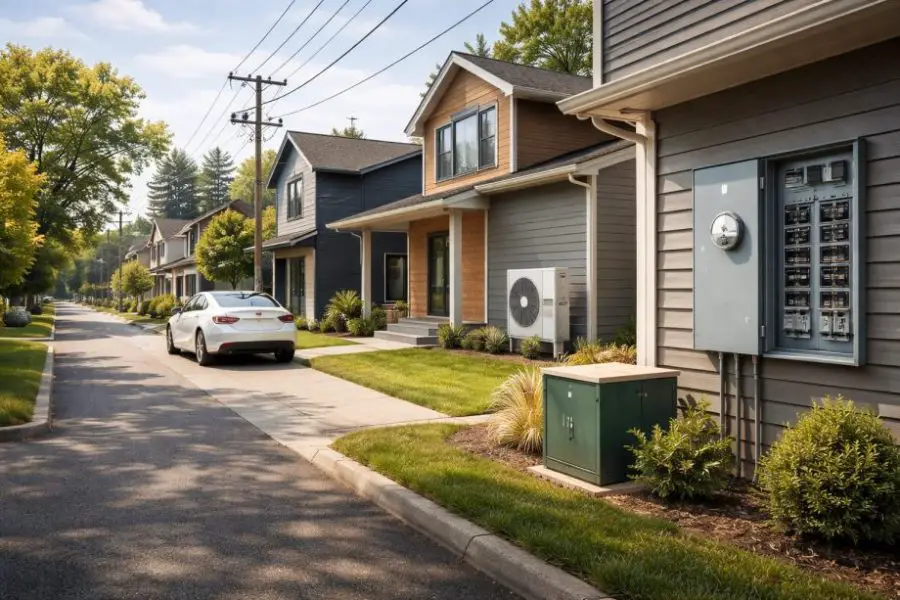
Electrification sounds like a fancy word, but the idea is simple: stop burning fuel for everyday things and use electricity instead.
That means swapping gas cars for electric vehicles, swapping a gas furnace for a heat pump, and moving more of our “daily energy” onto a grid that can get cleaner over time.
And here’s the part people miss: electrification isn’t a single purchase. It’s a clean power shift you can do gradually, upgrade by upgrade, usually when old equipment is ready to be replaced anyway.
✅ Start Here
- Electrification = replacing fuel-burning devices (cars, furnaces, water heaters) with electric ones.
- Clean power shift = the electricity powering those devices gets cleaner as more renewables come online.
- Best approach = start with efficiency, then electrify as you replace old equipment.
If you want the big picture first, start here:
Clean Energy Sources: A Comprehensive Guide.
📦 What You’ll Learn
- What electrification means (and what it doesn’t)
- Why electric tech can be more efficient than burning fuel
- How EVs and heat pumps fit into the clean power shift
- Why smart grids and energy storage matter for reliability
- A realistic “do this first” plan you can actually follow
⚡ Electrification Explained: The Clean Power Shift
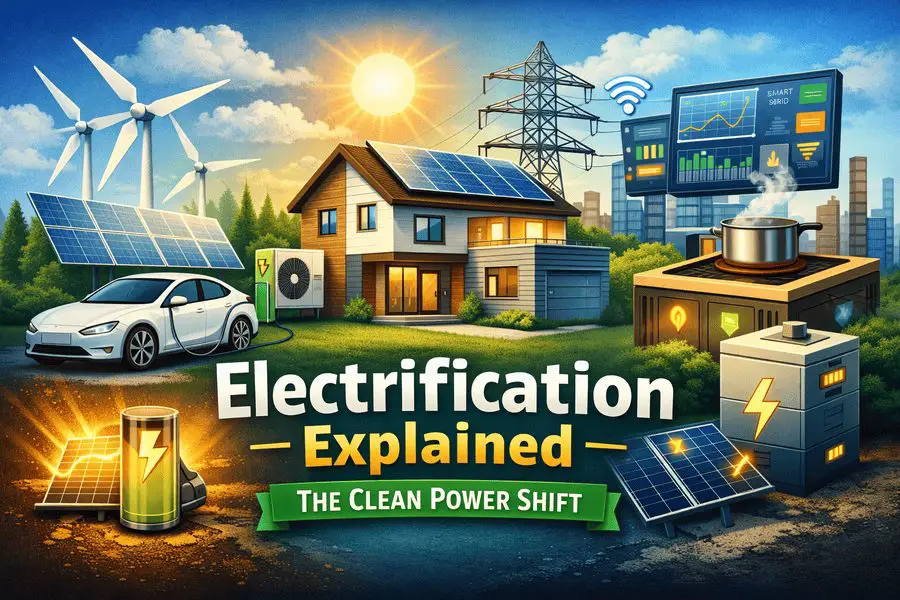
If you’ve ever looked at your car, your furnace, or your water heater and thought, “This thing is basically a fuel-burner,” you’re already halfway to understanding electrification.
A lot of modern life runs on combustion. Gasoline in cars. Natural gas in furnaces. Propane in rural areas. And that fuel-burning works… but it also locks in pollution and price swings that we don’t really need.
Electrification is the move away from burning fuel at the “end use.” Instead of flame-based machines, you use electric motors and heat pumps. And as the grid gets cleaner, your home and transportation get cleaner too—without you having to re-buy everything.
1️⃣ 🔥➡️⚡ What Electrification Means (And What It Doesn’t)
✅ The quick definition
Electrification means replacing fuel-burning equipment with electric versions that do the same job (often better). The biggest everyday examples are EVs, heat pumps, heat pump water heaters, and electric cooking.
🚫 What electrification is NOT
- It’s not “replace everything tomorrow.” Most people electrify as things wear out.
- It’s not “all or nothing.” You can electrify heating first, or transportation first, or just water heating.
- It’s not “perfect grid or bust.” Even a partially-clean grid can still cut pollution compared to burning fuel on-site.
🌎 Why people call it a “clean power shift”
With fossil fuels, your emissions happen every time you drive or heat your house. With electricity, you’re plugged into a system that can change.
As more wind, solar, hydropower, and other cleaner sources come online, the electricity mix improves. That means your EV or heat pump improves over time too—without changing the device.
2️⃣ ⚙️ Why Electric Often Wins: Efficiency Without the Hype
Here’s a good mental picture: burning fuel is like cooking over a campfire. It works, but it’s messy and you lose a lot of heat to the air. Electric tech is more like using a modern stovetop—it’s controlled and efficient.
⚡ Electric motors waste less energy
- Electric motors convert energy to motion very efficiently.
- Gas engines waste a lot of energy as heat.
- This is one reason EVs can feel “zippy” and still use less energy overall.
🌡️ Heat pumps move heat instead of making it
A heat pump doesn’t create heat the way a gas furnace does. It moves heat from outside to inside (or reverses in summer).
That “move heat” trick is why heat pumps can deliver more heating or cooling for the same amount of energy.
💡 Efficiency is the quiet hero of electrification
Before you electrify, it helps to shrink your energy needs. Less demand means smaller equipment, lower bills, and fewer “Do I need a panel upgrade?” headaches.
Energy Efficiency Is Clean Energy
- Seal drafts and add insulation where it makes sense.
- Use a smart thermostat (even before you change HVAC).
- Switch to LEDs and efficient appliances as replacements happen.
Improving Energy Efficiency in Older Houses: 11 Easy Tips
3️⃣ 🚗 Transportation Electrification: EVs and the Bigger Story
EVs are the most visible form of electrification because you can literally see them on the road. But the bigger point isn’t “new car tech.” It’s that transportation becomes something you can power with cleaner electricity instead of constant gasoline combustion.
Electric Vehicles Are More Than Just Cars
🔌 EV charging basics (no jargon)
- Home charging is the easiest day-to-day: you “start full” most mornings.
- Public charging matters for road trips and apartment living.
- Off-peak charging can be cheaper and easier on the grid.
🚌 Fleets and transit matter more than people think
When buses, delivery vehicles, and work fleets electrify, it speeds up charging infrastructure and normalizes the technology.
It also cuts pollution in places where people live and work—near roads, warehouses, and busy routes.
4️⃣ 🏠 Home Electrification: Heat Pumps, Water Heating, and Cooking
If EVs are the headline, home electrification is the long-term “bill saver.” Homes burn fuel in a few main places: space heating, water heating, and sometimes cooking.
Electrifying those pieces can reduce on-site combustion and make your home feel more comfortable and predictable.
🌡️ Heat pumps (the centerpiece upgrade for many homes)
A heat pump is basically an air conditioner that can run in reverse. In summer it moves heat out of your home.
In winter it moves heat into your home. That sounds like a magic trick, but it’s just physics and a clever refrigeration cycle.
- Comfort: steady temperatures without the hot/cold swings some systems create.
- Efficiency: moving heat is often more efficient than making heat from fuel.
- Two-for-one: heating + cooling in one system.
❄️ “Do heat pumps work in cold climates?”
This is one of the most common questions, and the short answer is: yes, modern cold-climate heat pumps can perform well in low temperatures.
In the coldest regions, some homes use a backup heat source, but for many households the heat pump covers most of the season.
🚿 Heat pump water heaters (a sneaky-good upgrade)
Water heating is often a big chunk of household energy use, and it’s easy to forget because the tank just sits there quietly doing its thing.
Heat pump water heaters use the same “move heat” idea to warm your water efficiently.
- Great for garages, basements, utility rooms, and other spaces where a little cooling isn’t a problem.
- Often pairs nicely with time-of-use rates (heat water when electricity is cheaper).
🍳 Electric and induction cooking (optional, but relatable)
Cooking isn’t always the biggest energy load, but it’s a very “human” part of electrification because you experience it every day.
Induction cooking is fast, responsive, and can improve indoor air quality compared to combustion.
- Speed: boils water quickly.
- Control: responsive like gas, without an open flame.
- Simple path: you can start with a portable induction cooktop.
🔧 “Do I need an electrical panel upgrade?”
Sometimes yes, sometimes no. It depends on what you’re adding and what your home already runs. The key is not to assume you’re stuck.
Many homes can electrify in phases, and load management can reduce the need for expensive panel work.
- Likely fine: one upgrade at a time, especially if you start with efficiency.
- Maybe needed: adding multiple big loads at once (EV + heat pump + electric water heater).
- Workarounds: smart chargers, timed operation, and load-shedding devices.
5️⃣ 🧠 The Grid Side: Smart Grids Make Electrification Practical
Electrification isn’t just about individual homes and cars. It also changes how the grid behaves.
If millions of people charge EVs at dinner time and run electric heat during a cold snap, the grid has to respond. That’s where smart grids come in.
The Significance of Smart Grids in Clean Energy
📡 What “smart” really means
- Two-way communication: the grid can “see” demand in real time.
- Demand response: shifting some usage to reduce peak stress.
- Faster restoration: in some systems, faults can be isolated quickly.
⏱️ Why timing matters (and you can benefit)
A smart grid world rewards flexibility. Charging an EV overnight instead of at 6 PM can be cheaper for you and easier on the grid. Heating water during off-peak hours can do the same.
This is where electrification stops feeling like a “sacrifice” and starts feeling like a smarter system.
6️⃣ 🔋 Energy Storage: The Bridge Between Clean Power and 24/7 Use
If smart grids are the “brain,” energy storage is the “buffer.” Storage helps when renewables are variable (like solar at night or wind that changes).
It also helps during peaks, so the grid doesn’t have to fire up the dirtiest, most expensive generation just to meet a short spike in demand.
🔋 Where storage shows up
- Grid-scale batteries: support the system and smooth renewables.
- Home batteries: backup power and time-shifting (where it pencils out).
- EV batteries: a huge distributed storage resource (now and in the future).
🌞 Storage + solar is a teamwork story
Solar can be amazing during the day, but storage can help stretch that value into evening hours. Even if you don’t own solar, storage on the grid can still improve reliability and reduce fossil “peaker” use.
7️⃣ 🤖 AI and the Clean Power Shift: Making Demand and Supply Play Nice
Electrification creates a puzzle: how do we match electricity supply (including renewables) with demand (cars, homes, businesses) at every hour of the day?
AI is one of the tools helping utilities and operators predict, plan, and respond faster.
🧠 Practical ways AI helps (without getting nerdy)
- Forecasting: predicting electricity demand and renewable output.
- Optimizing: timing EV charging and flexible loads to reduce peaks.
- Detection: spotting grid issues early and improving maintenance.
For most homeowners, you don’t “buy AI.” You benefit from it indirectly through smarter grid operations, better rate programs, and more reliable integration of renewables.
8️⃣ 💰 Cost, Incentives, and a Realistic “Do This First” Plan
The biggest electrification mistake is trying to do everything at once. A better approach is a “replacement rhythm.” When a furnace, water heater, or car is nearing the end of its life, that’s your moment.
You’re already spending money, so you upgrade the direction of the spending.
✅ A practical electrification order (works for most people)
- Step 1: do the cheap efficiency stuff first (sealing drafts, thermostat, LEDs).
- Step 2: when HVAC is due, consider a heat pump instead of another furnace/AC combo.
- Step 3: when the water heater dies, look hard at a heat pump water heater.
- Step 4: when it’s time for a new vehicle, price out an EV for your real driving habits.
- Step 5: add solar and/or storage if it fits your budget and goals.
🏢 Renters and apartment living (you’re not stuck)
- Portable induction cooktops are a low-commitment first step.
- Smart plugs and efficient lighting cut usage without renovations.
- EV ownership can still work with workplace charging or reliable local public charging.
9️⃣ 🌩️ Common Concerns (Answered Calmly)
“What about outages?”
Outages are real, and electrification makes reliability feel more personal. The good news is that resilience planning is improving: smarter grid equipment, better restoration tools, and (where it makes sense) home backup options like batteries or generators. Also, basic weatherization—insulation, sealing, and smart controls—helps your home ride through short outages more comfortably.
“Isn’t the grid still fossil fuels?”
In many places, the grid still uses fossil fuels some of the time. But electrification is about direction and improvement. Electricity can shift cleaner as renewables grow. A gasoline car can’t “get cleaner” without replacing it, but an EV can get cleaner as the grid mix improves.
“Will electrification overload the grid?”
It could stress the grid if everything happens at once and at the worst possible times. That’s exactly why smart grids, demand response, and storage matter. The goal isn’t just “more electricity.” The goal is smarter electricity use.
✅ Key Takeaways
- Electrification replaces fuel-burning equipment with electric options.
- Efficiency upgrades first make electrification cheaper and smoother.
- EVs and heat pumps are the biggest “everyday” electrification wins.
- Smart grids and storage help keep power reliable during the shift.
- You don’t have to do it all at once—phase it in when replacements happen.
🌿 Conclusion
Electrification isn’t about perfection. It’s about progress. If you do one thing, do the thing that makes the next thing easier—usually efficiency. Then, when your furnace, water heater, or car is due for replacement, you’ll be ready to make a cleaner upgrade without turning your life upside down.
And if you’re building your own “start here” path, these posts pair perfectly with this one:
- Energy Efficiency Is Clean Energy
- The Significance of Smart Grids in Clean Energy
- Energy Storage Explained
- AI in Renewable Energy
❓ Electrification Explained: The Clean Power Shift: FAQs
What does electrification mean in simple terms?
It means replacing devices that burn fuel (gas cars, gas furnaces, gas water heaters) with electric versions that can run on cleaner power over time.
Is electrification worth it if my electricity isn’t 100% renewable?
Often yes. Electricity can get cleaner as the grid changes, and many electric technologies use energy more efficiently than fuel-burning equipment.
What is the biggest electrification upgrade for most homes?
For many homes, a heat pump is the biggest single upgrade because it handles heating (and cooling) efficiently and reduces on-site combustion.
Do heat pumps work in cold climates?
Yes, many modern heat pumps are designed for cold climates. Some homes use backup heat during extreme conditions, but heat pumps can cover much of the season in many regions.
Will electrification overload the grid?
It can stress the grid if demand spikes at the same times, which is why smart grids, time-based rates, demand response, and storage are important parts of the solution.
What is demand response and why does it matter?
Demand response shifts some electricity use to lower-demand times, helping prevent peaks and making the grid more reliable and affordable.
What is the cheapest way to start electrifying?
Start with efficiency upgrades (sealing drafts, insulation where needed, smart thermostat, LEDs) and then electrify when old equipment needs replacing.
How does energy storage support electrification?
Storage helps balance supply and demand by storing electricity when it’s abundant and delivering it when it’s needed, which supports renewables and reduces peak stress.
📚 References & Further Reading
U.S. Department of Energy – Building Technologies Office (Electrification & Efficiency)
U.S. Department of Energy – Vehicles & Transportation Technologies
U.S. Environmental Protection Agency – Energy and Emissions
U.S. Department of Energy – Office of Electricity (Grid Reliability & Modernization)