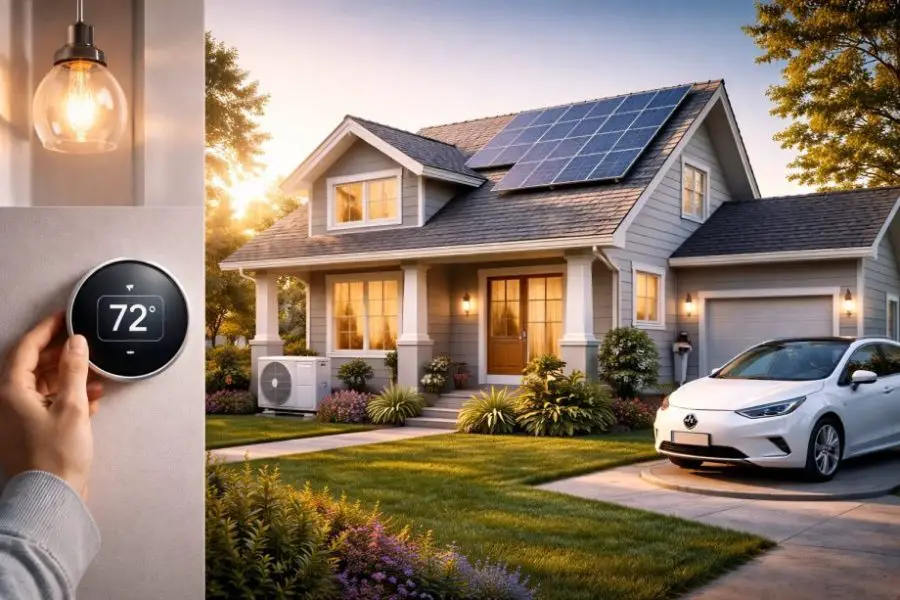
Energy efficiency is clean energy you don’t have to generate, store, or transmit. If you want faster emissions cuts and lower bills, this is where you start.
✅ Start Here
If you’re trying to “go renewable,” it’s tempting to jump straight to solar, wind, batteries, and fancy grid tech.
But here’s the truth: the fastest clean energy win is usually using less energy in the first place.
That’s why people call efficiency the “first fuel” (or the cleanest kilowatt-hour: the one you never had to make).
In this guide, you’ll learn where efficiency delivers the biggest wins, how it supports renewables, and how it ties into smart grids and storage.
📦 What You’ll Learn
- ✅ Why energy efficiency is basically “clean energy” in disguise
- ✅ The difference between efficiency and conservation (and why it matters)
- ✅ The biggest efficiency upgrades for homes and buildings
- ✅ How efficiency makes renewables + storage + smart grids work better
- ✅ A simple “start today” checklist that actually sticks
⚡ Energy Efficiency Is Clean Energy: The Fastest Way to Cut Emissions
Let’s start with a quick mindset shift: clean energy isn’t only about where electricity comes from. It’s also about how much electricity we need in the first place.
When demand drops, everything gets easier:
- ✅ It’s simpler to cover your needs with renewables
- ✅ The grid gets less stressed (fewer “oh no” moments during heat waves)
- ✅ You need less energy storage for reliability
- ✅ And yes… your bills usually go down too
If you want the big picture of clean power options, this pairs perfectly with: Clean Energy Sources: A Comprehensive Guide.
1️⃣ 🧠 Why Energy Efficiency Counts as Clean Energy
✅ Energy efficiency vs. energy conservation (simple definitions)
These two get mixed up all the time, so let’s make it easy:
- 🟢 Energy efficiency = you get the same comfort/service using less energy (better tech, better systems).
- 🟡 Energy conservation = you use less by doing less (behavior change).
Both help. But efficiency is powerful because it can be “set it and forget it.” You improve the building, upgrade the appliance, tune the system… and it keeps saving energy whether you remember or not.
📉 The demand side of the grid (where the magic happens)
The electric grid has one job that never stops: matching supply and demand in real time.
When demand spikes (hot afternoons, cold snaps, everyone cooking dinner at once), utilities often turn to expensive “peaker” generation and push the grid hard. That’s when costs rise and emissions can climb.
- ⚡ Efficiency lowers total demand
- 🔥 Efficiency reduces peak demand
- 🧯 Less peak demand = fewer grid emergencies and less dirty backup power
🧩 Why efficiency makes renewable energy easier
Here’s a super practical way to think about it:
If your home needs less energy, you need less renewable energy to cover it. That means smaller (cheaper) systems and fewer headaches.
- 🌞 A lower load means solar can cover a bigger slice of your usage
- 💨 Wind and community clean energy programs stretch further
- 🔋 Storage becomes more effective when the load is flatter and smaller
This connects directly to your storage topic: Energy Storage Explained: The Missing Link in Renewable Power.
🚧 “Why not just build more renewables?” (quick reality check)
We absolutely should build more clean generation. But relying on “build-only” is slow and expensive compared to cutting waste.
- 🏗️ New power projects take time (permitting, interconnection, construction)
- 🔌 Even renewables need grid upgrades to move power around
- ✅ Efficiency can reduce demand this month, not five years from now
Best strategy? Do both: build clean supply and shrink waste.
2️⃣ 🏠 Where Energy Efficiency Delivers the Biggest Wins
If you want the biggest payoff, don’t start with the smallest tricks. Start with the stuff that controls most energy use.
🏡 Homes: the “Big Three” that move the needle
1) 🧱 The building envelope (stop leaks first)
Your “envelope” is everything between you and the outdoors: insulation, sealing, windows, doors, attic, crawl space, and all the sneaky gaps you don’t notice until you do.
- ✅ Air sealing (drafts = energy leaking out)
- ✅ Attic insulation (often the best ROI)
- ✅ Weatherstripping around doors and windows
If your home is older, this is the perfect companion post: Improving Energy Efficiency in Older Houses: 11 Easy Tips.
2) 🌡️ Heating and cooling (comfort without the waste)
Heating and cooling can be the biggest energy use in many homes. The goal isn’t “be uncomfortable.” The goal is: get the same comfort with fewer kilowatt-hours.
- ✅ Tune-up and filter changes (easy, boring, wildly effective)
- ✅ Smart thermostat schedules (especially if your routine is predictable)
- ✅ Duct sealing (if you have ducts… they’re probably leaking)
- ✅ Heat pumps (big efficiency gains when paired with a tighter home)
3) 💡 Lighting and appliances (easy wins that stack)
Lighting and appliances won’t always beat HVAC for total impact, but they’re great because you can improve them quickly.
- ✅ LEDs where you use lights the most
- ✅ Efficient appliances when it’s time to replace (don’t junk a working fridge just to feel productive)
- ✅ Smart power strips for “always-on” electronics
🏢 Buildings & businesses: efficiency at scale
This is where efficiency gets seriously powerful: when you scale it across offices, schools, warehouses, and multi-family buildings.
- 📊 Building controls and scheduling (HVAC + lighting + occupancy)
- 🔁 Retrofits that pay back (controls, insulation, equipment upgrades)
- 🧩 Better operations (the “settings” matter as much as the gear)
📌 Demand response: efficiency’s underrated best friend
Demand response isn’t only about using less energy. It’s about using energy at smarter times.
- ⏱️ Shift heavy use off peak hours
- 🌬️ Use more power when renewables are abundant
- 🧠 Helps the grid avoid strain and outages
This is where smart grids shine: The Significance of Smart Grids in Clean Energy.
🚗 EVs and home energy: “charging is part of the grid now”
EVs are great… but unmanaged charging can increase peaks. Smart charging flips that story and turns EVs into a flexible load that works with the grid instead of against it.
- ✅ Charge off-peak (usually cheaper)
- ✅ Schedule charging for times when grid demand is lower
- ✅ Pair charging with renewables when possible
Related read: Electric Vehicles Are More Than Just Cars.
3️⃣ 🧠 How Efficiency Strengthens Renewables, Storage, and the Grid
🔋 Efficiency reduces the need for storage (and saves real money)
Storage is awesome. It’s also expensive. The easiest way to “buy less battery” is to flatten and reduce the load first.
- ✅ Lower peaks = smaller storage needed for reliability
- ✅ Smoother demand = easier renewable integration
- ✅ Less strain on transmission and distribution systems
If you want the full storage breakdown: Energy Storage Explained: The Missing Link in Renewable Power.
🤖 Where AI fits (without turning this into an AI rabbit hole)
AI is helpful when it’s doing one thing: spotting patterns and optimizing systems faster than humans can.
- 📈 Predicting demand peaks and smoothing them
- 🏠 Smart home automation (HVAC, lighting, plug loads)
- 🏢 Building management systems that learn occupancy patterns
If you want the home-focused version: Ways AI Can Improve Energy Efficiency in Homes In 5 Ways.
🌍 Efficiency and climate resilience
As climate extremes increase, efficiency becomes a comfort-and-safety strategy—not just a “save money” strategy.
- 🔥 Heat waves drive peak AC load
- ❄️ Cold snaps push heating systems hard
- ✅ A tighter, better-insulated home stays safer longer during outages
Related: The Impact of Climate Change on Clean Energy Strategies.
✅ Quick Start Checklist (Pick 3)
- ✅ Swap your most-used bulbs to LEDs
- ✅ Seal obvious drafts around doors/windows
- ✅ Set a thermostat schedule you can actually live with
- ✅ Clean/replace HVAC filters
- ✅ Use smart power strips for “always-on” electronics
- ✅ If your home is older: start with attic insulation and air sealing
📌 Key Takeaways
- ⚡ Energy efficiency is clean energy because it permanently reduces demand.
- 💸 It’s often the fastest and cheapest way to cut emissions.
- 🏠 Homes and buildings are the biggest opportunity zone.
- 🧠 Efficiency makes smart grids and renewable integration easier.
- 🔋 Lower demand reduces how much storage the grid needs.
🌿 Conclusion
Energy efficiency acts like a clean energy source by reducing demand, lowering emissions, and strengthening modern power grids.
If you take one idea from this post, make it this: you don’t have to overhaul your entire life to make a real impact.
Pick one upgrade that sticks. Plug one leak. Fix one inefficiency that’s been quietly draining money and energy every day.
When you do that, you’re not just saving power—you’re making renewables easier, making the grid stronger, and making your home more comfortable.
Want a smart next step? Read these in order:
- The Significance of Smart Grids in Clean Energy
- Energy Storage Explained: The Missing Link in Renewable Power
- Clean Energy Sources: A Comprehensive Guide
FAQs
Is energy efficiency considered renewable energy?
Not exactly. Renewable energy is about generating power from sources like solar and wind. Energy efficiency is about reducing how much energy you need. But in practice, efficiency acts like a clean energy resource because it lowers demand, emissions, and costs.
Why is efficiency cheaper than building new power plants?
Efficiency often costs less per unit of impact because reducing waste can be quicker and simpler than building new generation, upgrading transmission, and maintaining extra infrastructure. It also reduces peak demand, which is typically the most expensive electricity to supply.
How does energy efficiency help renewable energy?
When your home, building, or city uses less electricity, renewables can cover a larger share of demand. That makes it easier to integrate solar and wind without relying as much on fossil backup power.
Does efficiency reduce the need for energy storage?
Yes. Efficiency lowers total demand and smooths peak demand, which can reduce how much storage is needed to keep power reliable—especially during high-use hours.
Can AI really improve energy efficiency?
It can, especially when it’s used for forecasting and optimization—like adjusting HVAC schedules, reducing peak demand, and improving building management systems based on real-time conditions and patterns.
📚 References & Further Reading
U.S. Department of Energy (DOE) – Energy Saver: Reducing Electricity Use and Costs
U.S. Department of Energy (DOE) – Home Energy Assessments (Energy Audits)
U.S. Department of Energy (DOE) – Buildings Energy Efficiency
ENERGY STAR (EPA) – Energy Savings at Home
National Renewable Energy Laboratory (NREL) – Buildings Research
U.S. Department of Energy – Building Energy Codes Program