✅ Start Here
If you’ve ever thought, “Solar and wind are great, but what happens when the sun goes down or the wind stops?” — you’re thinking about energy storage.
This post explains storage in plain English, why it matters for reliability, and how it works alongside The Significance of Smart Grids in Clean Energy to make renewable power practical.
📦 What You’ll Learn
- ✅ What energy storage is (and what it isn’t)
- ✅ Why storage is the “reliability layer” for renewable power
- ✅ The main storage types (batteries, pumped hydro, thermal)
- ✅ How storage works with smart grids, EVs, and demand response
- ✅ What storage actually does during peaks, outages, and extreme weather
🔋 Energy Storage Explained: The Missing Link in Renewable Power
Energy storage is one of those topics that sounds technical… until you realize it’s basically the same problem you’ve already solved in everyday life.
You store food in a fridge so dinner doesn’t have to happen the second you buy groceries. You store water in a tank so every faucet doesn’t depend on perfect timing.
Energy storage is the same idea — it lets electricity be available when you need it, not only when it’s being produced.
And when it comes to renewables like solar and wind, storage is often the difference between:
- ⚡ “We generate clean power sometimes”
- ✅ “We can run a modern society on clean power reliably”
If you want the big-picture overview of how all clean sources fit together, start with Clean Energy Sources: A Comprehensive Guide. This post zooms in on the piece that keeps clean energy steady.
🧠 What is energy storage?
Energy storage is any system that captures energy now and releases it later. Sometimes that energy is stored as chemical energy (batteries), sometimes as moving water (pumped hydro), sometimes as heat (thermal storage), and sometimes in other forms.
The key point: storage isn’t “more generation.” It’s a buffer.
- ✅ Generation makes electricity.
- ✅ Transmission moves electricity.
- ✅ Storage shifts electricity through time.
That “shift through time” part is what makes it so important. Electricity supply and demand have to stay balanced every second. Storage helps make that balance easier (and cheaper) to maintain.
🌞 Why renewable energy needs storage
Solar and wind are clean, but they’re variable. That doesn’t mean they’re “bad.” It just means the system has to be designed around reality.
- 🌤️ Solar output drops in clouds and disappears at night.
- 🌬️ Wind can be strong one hour and quiet the next.
- 📈 Demand spikes at predictable times (morning routines, evening cooking, heat waves).
Without storage, a grid has fewer options when renewables dip or demand jumps. That’s why storage is often discussed alongside grid modernization and reliability.
If you want the honest “what makes this hard” view, Renewable Energy Challenges and Opportunities pairs perfectly with this post.
🧩 Storage doesn’t replace smart grids — it teams up with them
Think of energy storage as a tool, not a magic wand. Storage works best when the grid can see what’s happening and respond quickly — that’s where smart grids come in.
If you haven’t already, it’s worth reading The Significance of Smart Grids in Clean Energy. Smart grids provide the “nervous system” (data + controls). Storage provides the “muscle” (flexibility + backup).
Together, they help the grid do things like:
- 📉 Reduce peak demand stress
- 🔁 Smooth renewable ups and downs
- 🛡️ Keep critical services running during outages
- ✅ Use more clean energy instead of curtailing it
⚙️ How Energy Storage Works (Without the Headache)
Here’s the simplest way to understand what storage does on a modern grid:
- ✅ It saves energy when supply is high (or cheap).
- ✅ It releases energy when demand is high (or supply dips).
That’s it. The fancy part is choosing the right storage type for the job.
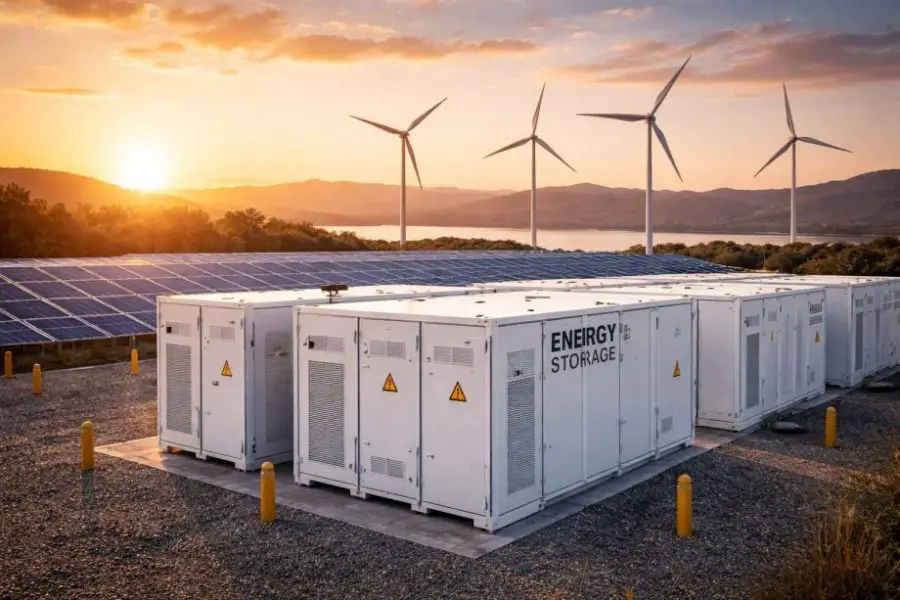
🔋 1) Battery storage (the most talked-about option)
Battery storage is popular because it’s fast and flexible. A battery can respond in seconds, which is perfect for grid stability and short-term balancing.
Where batteries shine:
- ⚡ Quick response for grid support (frequency, voltage, fast balancing)
- 📌 Peak shaving (covering demand spikes without firing up extra generation)
- 🌞 Time shifting solar (store afternoon sun, use it during evening peaks)
- 🏠 Backup for homes and critical buildings
Batteries also connect naturally to electric vehicles. EVs are basically rolling batteries, which is why electrification and storage keep showing up together in clean energy conversations.
If you want the broader context, read Electric Vehicles Are More Than Just Cars — it connects transportation to the energy system in a way most people never think about.
💧 2) Pumped hydro storage (old-school, still powerful)
Pumped hydro is one of the most established large-scale storage methods. It works like this:
- ⬆️ When electricity is abundant, water is pumped uphill to a reservoir.
- ⬇️ When electricity is needed, water flows back down through turbines to generate power.
It’s basically a rechargeable “gravity battery.” It can be extremely effective for longer storage windows, but it depends on geography and permitting, so it’s not equally available everywhere.
🔥 3) Thermal storage (storing heat or cold)
Thermal storage doesn’t always get the spotlight, but it’s quietly useful — especially for buildings and industry.
Instead of storing electricity directly, thermal systems store energy as:
- 🔥 Heat (hot water tanks, molten salt in some power applications)
- ❄️ Cold (ice storage for air conditioning in some commercial buildings)
The win here is demand timing: buildings can shift heating/cooling loads away from peak grid hours.
🏠 Grid-scale vs “behind-the-meter” storage
Storage shows up in two big places:
- 🏭 Grid-scale: big systems that support the entire network (utilities and operators use these).
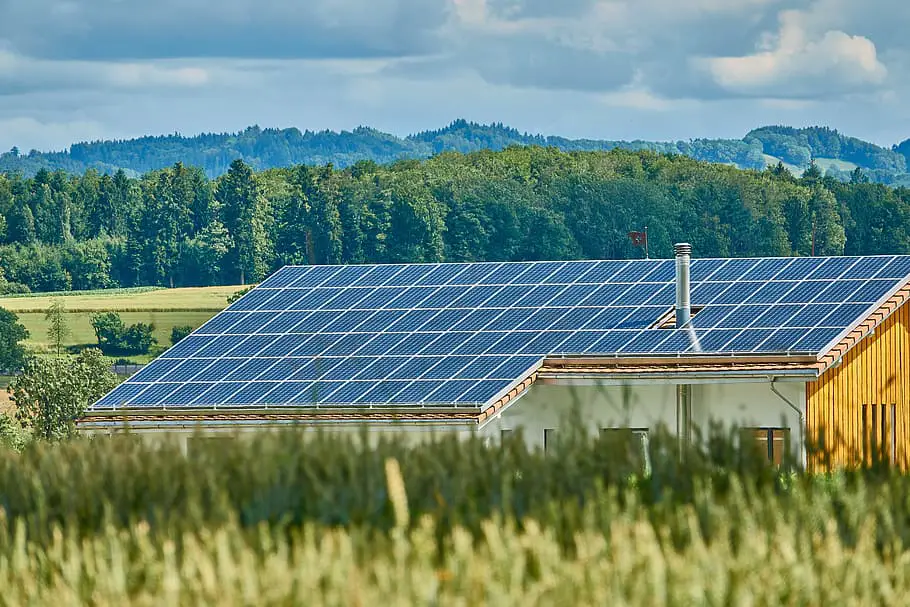
- 🏡 Behind-the-meter: storage at a home or business (often paired with rooftop solar).
Both matter. Grid-scale storage improves the whole system. Behind-the-meter storage can reduce strain during peaks and provide resilience at the household or community level.
🧠 Storage + smart grids = the “control + flexibility” combo
This is the part that turns storage from “nice to have” into “system-level advantage.” Smart grids provide real-time data and controls, which helps storage do the right thing at the right time.
Common smart-grid + storage jobs include:
- 📊 Load shifting: store energy off-peak, use it at peak
- 📉 Peak shaving: reduce demand spikes (cheaper than building new infrastructure)
- 🔁 Balancing renewables: smooth solar/wind output swings
- 🛡️ Resilience: support critical loads during outages
This is why storage is often described as the reliability layer for clean energy. It doesn’t just add capacity — it adds control.
🌍 Why Energy Storage Matters in Real Life
Energy storage isn’t only a “future tech” story. It affects things you actually feel:
- ✅ fewer disruptions during high-demand events
- ✅ better use of the renewable energy we already built
- ✅ more stable pricing and fewer emergency supply scrambles
⚡ Reliability: keeping the lights on when conditions change
One of the toughest tests for any grid is extreme conditions — heat waves, cold snaps, storms, and wildfire seasons. Storage can help the system respond faster and reduce the need for last-minute fossil backup.
Clean energy planning increasingly has to account for climate-driven stress on infrastructure. If you want that angle, connect this post to The Impact of Climate Change on Clean Energy Strategies.
💸 Efficiency: using more clean energy instead of wasting it
Here’s a weird truth: sometimes renewable energy is produced when the grid can’t use it all. In some cases, that power can be “curtailed” (basically wasted) because there’s nowhere for it to go at that moment.
Storage helps prevent that by capturing surplus energy and releasing it later. In other words: storage helps you get more value from every solar panel and wind turbine already installed.
🚗 EVs as part of the storage conversation
As EV adoption grows, EV charging becomes a grid factor — and also a grid opportunity. When charging is coordinated (time-of-use rates, smart charging, managed programs), EVs can help flatten demand peaks.
That’s why the EV post matters here: Electric Vehicles Are More Than Just Cars.
🤖 The software layer: optimization (and where AI shows up)
Storage isn’t only hardware. The “brains” matter — forecasting, automated controls, and dispatch logic determine when batteries charge or discharge.
If you want to connect this to your tech angle, link this section to Impact of AI on Renewable Energy Production: 3 Best Uses Of AI.
The key takeaway is simple: better forecasting and control can reduce waste and improve grid stability.
✅ Key Takeaways
- 🔋 Energy storage shifts electricity through time — it’s a buffer, not a power plant.
- 🌞 Storage helps renewable energy stay reliable when solar and wind vary.
- ⚙️ Batteries are fast and flexible; pumped hydro and thermal storage can support longer needs.
- 🧠 Smart grids + storage work together: data + control + flexibility.
- 🌍 Storage improves resilience and helps use more clean energy instead of wasting it.
Conclusion
Energy storage is what makes renewable energy reliable. Learn how batteries, EVs, and grid storage stabilize clean power systems.
If clean energy is the goal, energy storage is one of the clearest “make it work” solutions.
It doesn’t solve every challenge, but it makes the whole system more flexible and reliable — especially when paired with modern grid tools.
Want to keep building the full picture? Pair this post with:
- The Significance of Smart Grids in Clean Energy
- Clean Energy Sources: A Comprehensive Guide
- Renewable Energy Challenges and Opportunities
FAQs
What is energy storage in renewable energy systems?
Energy storage captures energy when it’s available and releases it later. In renewable systems, storage helps balance variable solar and wind output so electricity can stay reliable during demand peaks or low-generation periods.
Why are batteries important for clean energy?
Batteries respond quickly and can store surplus renewable electricity for later use. They’re especially useful for smoothing short-term fluctuations, supporting peak demand, and improving grid stability.
Is energy storage expensive?
Costs vary by technology and scale. Some storage options have higher upfront costs but can reduce long-term costs by avoiding peak power expenses, reducing outages, and improving the efficiency of renewable energy use.
How does energy storage work with smart grids?
Smart grids provide real-time data and controls that help storage charge when supply is high and discharge when demand is high. This supports load shifting, peak shaving, renewable integration, and resilience.
Can electric vehicles support the power grid?
Yes. Smart charging programs can shift EV charging away from peak hours. In some cases and locations, EVs may also provide grid services by acting as flexible loads or future storage resources.
📚 References & Further Reading
U.S. Department of Energy – Office of Electricity: Energy Storage
National Renewable Energy Laboratory (NREL) – Grid Modernization
U.S. Energy Information Administration (EIA) – Energy Storage Explained
U.S. Department of Energy – Electric Vehicles & Alternative Fuels Data Center
National Renewable Energy Laboratory (NREL) – Energy Systems & Research
U.S. Department of Energy – Grid Modernization & Smart Grid Programs