
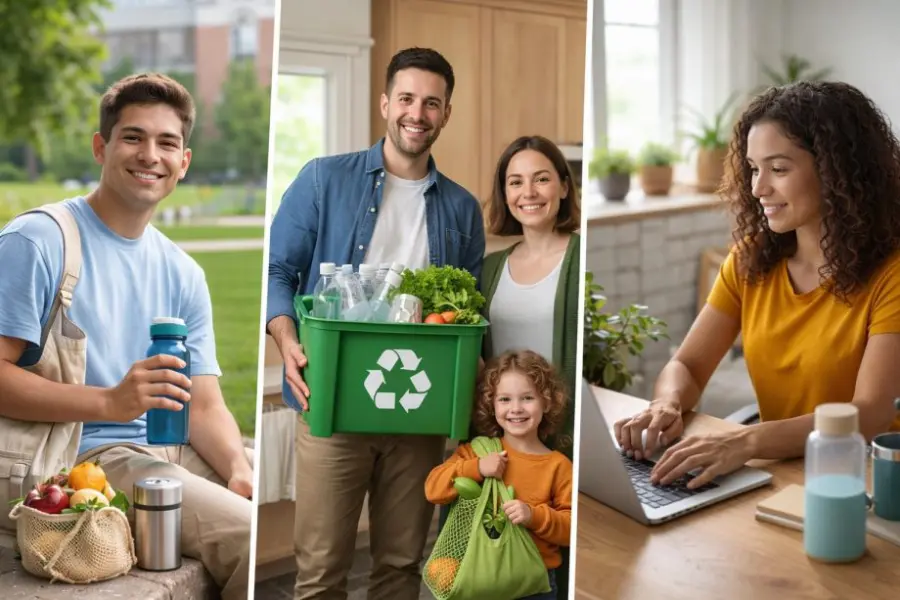
Sustainable living for different lifestyles often gets presented as a single lifestyle with a single set of rules.
That version usually assumes you own a home have extra time and can afford to replace things whenever you want. For many people that picture does not match real life.
The truth is sustainable living looks different depending on your schedule housing situation income and priorities.
What matters is not copying someone else’s setup but finding changes that fit your life and actually last.
This guide shows how sustainable living works across different lifestyles. Not perfection. Not extremes. Just realistic ways to reduce waste and make better choices within the limits you already have.
📦 What You’ll Learn
- 🧠 Why sustainable living is not one size fits all
- 🎓 How sustainability works for students and young adults
- 🏢 What actually helps in apartments and rentals
- 💸 How to approach sustainability on a tight budget
- 🔄 How to choose habits that fit your lifestyle long term
🔗 Explore Sustainable Living Guides
- 🌿 Sustainable Living Ideas Pillar
- ♻️ Zero Waste at Home Simple Changes That Reduce Trash and Stress
- 🍽️ Low Waste Kitchen Ideas
- 🌱 Composting at Home What Actually Works Even in Apartments
- 🥕 Sustainable Food Choices at Home What Actually Makes a Difference
- 🧭 Sustainable Living for Different Lifestyles What Actually Works
- 🛍️ Conscious Consumption and Ethical Choices What Actually Matters
- 🏠 Sustainable Home Upgrades Easy Changes That Cut Waste and Bills
🧠 Why Sustainable Living Looks Different for Everyone
Most people do not fail at sustainable living because they do not care. They struggle because the advice they see assumes resources they do not have.
Time, money, space, and control over housing all affect what changes are realistic.
Sustainable living works best when it adapts to your situation instead of asking you to adapt your life around it. That might mean focusing on habits instead of purchases or choosing reduction over replacement.
The most sustainable option is often the one you can repeat without stress.
🎓 Sustainable Living for Students and Young Adults
Students and young adults often live with limited space, shared housing, and unpredictable schedules. That makes large lifestyle changes unrealistic but it does not make sustainability impossible.
For this stage of life the biggest impact usually comes from habits not products.
- ♻️ Reduce single use items where it is easy
- 🍽️ Focus on food waste and leftovers
- 🧠 Avoid buying things you cannot store or maintain
Simple choices like carrying a reusable bottle or eating food before it spoils matter more than buying eco branded products you cannot keep long term.
🏢 Sustainable Living in Apartments and Rentals
Renters often feel blocked from sustainable living because they cannot make permanent changes.
While it is true that you may not control appliances or insulation there are still meaningful areas where renters have influence.
Apartment friendly sustainability focuses on what you can control.
- 💡 Reducing energy use through habits
- 🗑️ Minimizing waste and food loss
- 🌱 Choosing composting options that fit shared spaces
Portable habits move with you. That makes them ideal for rental living.
💼 Sustainable Living for Busy Schedules
Busy households often assume sustainability requires extra effort. In reality the most effective changes usually save time instead of adding to your workload.
Systems that reduce decision fatigue are especially valuable when schedules are tight.
- 🔄 Repeat meals and routines
- ❄️ Freeze food before it spoils
- 🛒 Shop for how you actually eat
Sustainability should make daily life smoother not harder.
💸 Sustainable Living on a Budget
Sustainable living does not require spending more money. In many cases it works best when spending is reduced.
Budget focused sustainability prioritizes using what you already own and avoiding waste.
- 🧺 Keep items in use longer
- 🛍️ Buy less but use more fully
- 🔁 Repair or reuse before replacing
When money is tight the most sustainable option is often the one that avoids unnecessary purchases altogether.
🔄 Choosing Sustainable Habits That Fit Your Life
The goal of sustainable living is not to do everything. It is to choose changes that fit your current lifestyle and can grow with you over time.
In the next section we will look more closely at how different lifestyles can prioritize sustainability without feeling overwhelmed or judged.
🏠 Renters and Homeowners Have Different Sustainability Levers
Renters and homeowners often hear the same sustainability advice even though their control over a space is very different.
Sustainable living works best when you focus on what you can change rather than what you cannot.
🏢 What Works Best for Renters
Renters usually have limited control over appliances insulation and fixtures. That does not limit impact as much as it seems.
- 💡 Reduce energy use through daily habits
- 🗑️ Focus on waste reduction and composting options
- 🧺 Choose reusable items that move with you
Portable habits are powerful. They follow you from place to place and add up over time.
🏡 What Works Best for Homeowners
Homeowners often have access to larger structural improvements but that does not mean everything needs to be done at once.
- 🔧 Prioritize upgrades with clear payback
- 🌡️ Improve efficiency before adding new systems
- 📉 Focus on changes that lower ongoing use
Sustainable living for homeowners works best when upgrades support everyday habits rather than replace them.
👨👩👧 Sustainable Living for Families and Shared Households
Families and shared households face unique challenges. Multiple schedules, preferences, and habits mean sustainability needs to be simple and visible to work consistently.
🍽️ Make Low Waste the Default
In busy households the easiest option usually wins. Designing systems that naturally reduce waste is more effective than relying on reminders.
- 👀 Store food where everyone can see it
- 🔄 Repeat meals that get eaten
- 🧊 Freeze food before it becomes questionable
🧠 Focus on Shared Wins Not Rules
Sustainable living works better when it feels collaborative instead of restrictive.
- 🤝 Agree on a few shared habits
- 🎯 Avoid policing individual choices
- 🌱 Let changes grow gradually
Consistency across the household matters more than perfect compliance.
🧍 Sustainable Living for Solo Households
Living alone changes sustainability priorities. Smaller households often waste less food but may struggle with packaging sizes and energy efficiency.
🥕 Scale Food Choices to Real Needs
Buying smaller quantities and choosing flexible ingredients reduces waste for solo households.
- 📦 Choose foods that freeze well
- 🍲 Cook once and eat multiple times
- 🛒 Avoid bulk items that expire
💡 Be Strategic About Energy Use
Solo households can reduce energy use significantly by adjusting routines.
- 🌡️ Heat or cool only used spaces
- 🔌 Turn off unused electronics
- 🕒 Use appliances efficiently
💼 Sustainable Living Around Work and Home Offices
Work routines shape daily consumption more than most people realize. Home offices and hybrid schedules offer opportunities to reduce waste and energy use.
- 📄 Reduce paper and single use supplies
- 💡 Optimize lighting and electronics
- 🧃 Reuse mugs bottles and containers
Small workday habits repeated daily can have a meaningful impact.
🧭 Let Your Lifestyle Set Priorities
Sustainable living becomes manageable when you let your lifestyle guide priorities instead of chasing every recommendation.
In the final section we will look at common misconceptions, answer key questions and help you choose where to focus next without feeling overwhelmed.
🚫 Common Myths About Sustainable Living and Lifestyles
A lot of sustainable living advice fails because it is built on assumptions that do not match real lives. Clearing up these myths helps people choose changes that actually last.
🎯 You Have to Do Everything to Make a Difference
You do not need to adopt every sustainable habit at once. A few changes repeated consistently matter more than chasing completeness.
🏠 Sustainability Only Works If You Own a Home
Many impactful habits work anywhere. Waste reduction food choices and daily routines often matter more than permanent upgrades.
💸 Sustainable Living Is Too Expensive for Tight Budgets
In practice sustainability often saves money by reducing waste and unnecessary purchases. Using what you already have is one of the most effective approaches.
⏳ You Need More Time to Live Sustainably
Well designed systems reduce effort over time. When routines fit your schedule sustainability becomes easier not harder.
❓ Sustainable Living for Different Lifestyles FAQs
Can sustainable living really work for busy lifestyles?
Yes. Sustainable living works best when it simplifies routines and reduces decision fatigue. Simple repeatable habits are ideal for busy schedules.
What if my lifestyle changes over time?
Sustainable living should adapt as your life changes. Habits can shift with new jobs moves or family situations without starting over.
Is it better to focus on habits or purchases?
Habits usually deliver more impact than purchases. Using what you already own and reducing waste often matters more than buying new products.
How do I choose where to start?
Start with changes that feel easiest for your current lifestyle. Success builds momentum and makes future changes simpler.
Can small households still make a meaningful impact?
Yes. Even small households influence demand and reduce waste through daily choices. Consistency matters more than scale.
🌿 Final Thoughts: Sustainable Living Should Fit Your Life
Sustainable living works when it fits who you are right now. It does not require a specific lifestyle budget or level of commitment.
Choose habits that match your space schedule and priorities. Let sustainability grow naturally as your life changes. The most effective approach is the one you can live with comfortably.
Sustainable Living Ideas: 20 Green Growth Ideas
📚 References and Further Reading
- EPA Sustainability Overview
- U.S. Department of Energy Energy Saver
- University Extension Sustainability Resources